
Constable of Ravens LLC
Educational Gaming
How Water Thinks Trailer 1
How Water Thinks Trailer 2
Download How Water Thinks
Publishing
Visit us at TheX-Press
TheX-Press Blogs
Contact us for more information
Thank you for your response. ✨

How Water Thinks Trailer 1
How Water Thinks Trailer 2
Download How Water Thinks
Visit us at TheX-Press
TheX-Press Blogs
by Hugh Lester
17 March 2014
In an earlier essay, “Notes on Human Use,” I introduced the concept of affordances and constraints. Built form, such as walls, act as constraints to movement. Benches or the tops of low walls afford places to sit and rest. Urban fabric can therefore be functionally reduced to Affordance-Constraint models which incorporate both psychology and architecture in their narrowing of scope to navigable space — that which one can move through and utilize — to inform and assess human use and outcomes.
That essay concluded with a quote from Winston Churchill, who famously said that “We shape our buildings, and afterwards, our buildings shape us.” The working hypothesis was that affordances and constraints drive human use which then drives societal outcomes. It is this hypothesis that I would like to explore in more depth in this essay.
Perhaps the best strategy would be to step away from the urban context and consider an analogous condition: that of the city in miniature, the ant colony. Edward O. Wilson and others have exhaustively studied insect societies that create these complex and highly varied combinations of excavation and deposition. Why and how they occur is a topic worthy of further consideration.
An individual ant is not very interesting. Its level of intelligence is minimal; its problem solving skills miniscule. But even these limitations allow for rule based behavior. Paired with asynchronous forms of communication such as pheromones in scent markers or trails, or the ability to categorize and count other ants, complex behaviors emerge. Those behaviors either contribute to the survival of the colony or they don’t, so environmental pressures help select for what works.
Stigmergy is defined as indirect coordination between agents via a trace left in the environment. Such traces are associated with an initial action, and these traces stimulate the performance of another action. Subsequent actions reinforce and build on each other, with the spontaneous emergence of coherent, apparently systematic activity resulting in self-organizing systems. Stigmergy supports complex, seemingly intelligent agglomerations, without centralized planning, control, or even direct communication between agents. This results in efficient collaboration between extremely simple agents with limited memory, intelligence or awareness. Collectively they become smart; unaware but smart: a lot like neurons in the brain.
In this way, the specifics of the environment the colony faces at any given time is determined and the resultant adaptive behavior of the colony maximizes return on the investment of time and limited resources. It makes sense, then, that the built form that emerges in different environments differ from each other. Of course the differences between species of ants contribute to the differences in the structures they generate, but it is safe to say that the environment shapes emergent behavior on a timescale that is much shorter than evolution of the ant species themselves. Thus the behaviors drive the needs instead of needs driving behaviors. Let’s explore this is more detail via an example.
An ant colony exists and its habitat is established. Its environment is relatively stable but variation and random events occur. For example, a gust of wind causes grains of sand to fall into an opening in the habitat. As an ant moves through the passage leading to the opening it encounters loose grains of sand. If it is already carrying something, it will likely ignore the grains of sand, continuing on its way. If not, it will pick up sand and carry it to the lip and drop it outside the habitat. It remains a trash collecting ant or whatever role (via emergent division of labor) it was fulfilling at the moment of the event.
Later, an anteater rips into the habitat, exposing the ants and devouring as many as possible. At least half of the above ground habitat is destroyed, and quite a bit below grade. Just as before, the ant encounters sand (rubble from the destroyed habitat) and attempts to take it out. It does its best, given the circumstances, and in the course of doing so leaves a trace in the environment which is reinforced as additional ants do the same upon encountering loose sand. At some predefined trigger, probably based on the strength of the scent of the trail or the number of “rebuilding” or “clearing” ants encountered, the ants normally tasked with garbage collection or foraging or whatever re-task as rebuilding or clearing ants. Through some process as yet poorly understood, the habitat reemerges in its original form, or at least in a form very similar to the original. The fact that the mound was partially destroyed may no longer be apparent in a couple of days, and the superorganism[1] has unknowingly — on either a societal or individual basis — reconstituted its optimal environmental response: its habitat.
Behavior (moving loose sand) left traces. Aggregate behavior triggered re-tasking. Re-tasked ants rebuilt the destroyed colony. Behavior drives need.
A company needs space to expand. They lease a second suite and hire an architect, who designs the new office space and the connections to the old office space. Contractors and vendors construct and install FF&E in the new office space. The company moves in and utilizes the space. Need drives behavior.
The difference between the two? The presence of mind in the latter versus the emergence of the qualities of mind in the former. Which is more sophisticated? Ask a complexity scientist.
Moving back to the scale of the urban, inhabitants are infinitely more sophisticated than ants. They do not generally partake of stigmergy. Means for communicating via “traces” certainly exist in the urban environment. These range from the formal and intentional, such as signage conveying rules from authorities: “No right on red” or “Keep off the grass,” to the unintentional like the presence of trash, weeds or broken windows and graffiti signaling the level of community pride, tolerance for such conditions, and even level of safety[2].
How such insights might be operationalized to benefit the performance of cities is not immediately clear. What is clear is that urban fabric, in the form of affordances and constraints, define what behaviors are even possible. The form that typical first world higher density cities currently take is one of silos (discrete buildings,) levels where movement between silos is supported, such as street and sidewalk networks, systems of skyways above, and subterranean concourses or subway stations and rail networks below. Exemplars such as Hong Kong, highly dense and highly connected on a multitudes of levels, are regularly cited[3]. However, such networked silo systems are often overtasked at peak periods because their spatial structure and transportation infrastructure are inherently limited in capacity. Twice a day there is a run on the bank.
The relative efficiency of forms of urban fabric, the one just discussed and alternatives would best be evaluated based on what such networks and their capacities afford inhabitants. Such evaluation could take multiple forms, and any and all forms of assessment should be considered. However, I suggest that agent-based models of navigable space in affordance-constraint models of urban fabric may be more informative than other options. My argument for this methodology follows, and utilizes the ant colony analogy once again.
Those researching ant colonies have developed techniques for studying their intricate forms, both above and below ground. These involve casting with molten metal or concrete slurry and then excavating to reveal a positive of the formerly negative spaces for observation, measurement and evaluation. Of course, such techniques destroy each colony and its inhabitants, which is unfortunate. However, their legacy is an object of wonder and beauty[4].
Agent-based modeling of affordance/constraint models of urban fabric inform in an analogous manner. Instead of molten metal filling every void, agents iteratively moving through space on random walks define the extent of navigable space and its relative frequency of use. Each agent’s path is recorded and overlaid on the millions of other agents’ paths during tens or hundreds of thousands of simulation runs. The result is a three dimensional heat map of potential use, independent of individual agent goal states. Understanding the relationship between different forms of urban fabric and their performance potential and limitations is the ultimate goal.
The questions such research allows us to ask, beyond questions of mobility or access, are interesting. One might wonder, “Can modeling improve performance over metrics?” Intuitively, the answer would be yes. Once one determines the metric and how it will be measured then iterative modeling will allow one to change the urban fabric such that performance on that metric improves. Small changes will be most informative, especially when enough small changes define the range within which variation is beneficial and within which diminishing returns are observed.
If you want the city to be just, for example, then metrics for equity, inclusion, diversity, access, justice and voice[5] would need to be monitored as the design of urban fabric was modified between simulation runs of a model incorporating established sociocultural drivers of such outcomes. Eventually, either the spatial effects on the just city will become clearer, or their contribution to features correlated with the just city will emerge. Of course, choosing the most difficult example possible is a rhetorical strategy. Researchers would certainly attack less complex problem domains before attempting anything that challenging. However, no metric or combination of metrics are automatically out of bounds as long as definition and monitoring are properly executed.
Even more compelling are questions such as “Can the design of a city, absent top-down controls or influences[6], drive performance on metrics such as public safety or inhabitant health?” Crime Prevention Through Environmental Design (CPTED) argues in the affirmative[7]. Designing cities so that inhabitants lead more active, healthy lives is a very active area of research, although policy formulation dominates. Other metrics will be addressable, but only by trying will we discover the potential and the limits of these methods.
1 Hölldobler, B. & Wilson, E. 2009. The Superorganism: The Beauty, Elegance, and Strangeness of Insect Societies. New York: W.W. Norton and Co.
2 Salesses, P., Schechtner, K., & Hidalgo, C. 2013. The Collaborative Image of The City: Mapping the Inequality of Urban Perception. PloS ONE, 8 (7), art. no. e68400.
3 Solomon, J., Wong, C., & Frampton, A. 2012. Cities Without Ground: A Hong Kong Guidebook. New York: ORO Editions.
4 Videos highlighting the casting of ant colonies, both large and small scale: http://youtu.be/CmD5ahkOPAQ and http://youtu.be/EWVx9K7KwBA
5 Griffin, T. 2013. Design for the Just City. J. Max Bond Lecture at the Center for Architecture, 536 Laguardia Place, New York, NY 10012. Website. http://cfa.aiany.org/index.php?section=calendar&evtid=6395 Accessed 10/4/13.
6 laws, rules, advertising, signage, etc
7 Crowe, T. 2000. Crime Prevention through Environmental Design: Applications of Architectural Design and Space Management Concepts, Second Edition. Boston: Butterworth-Heinemann.
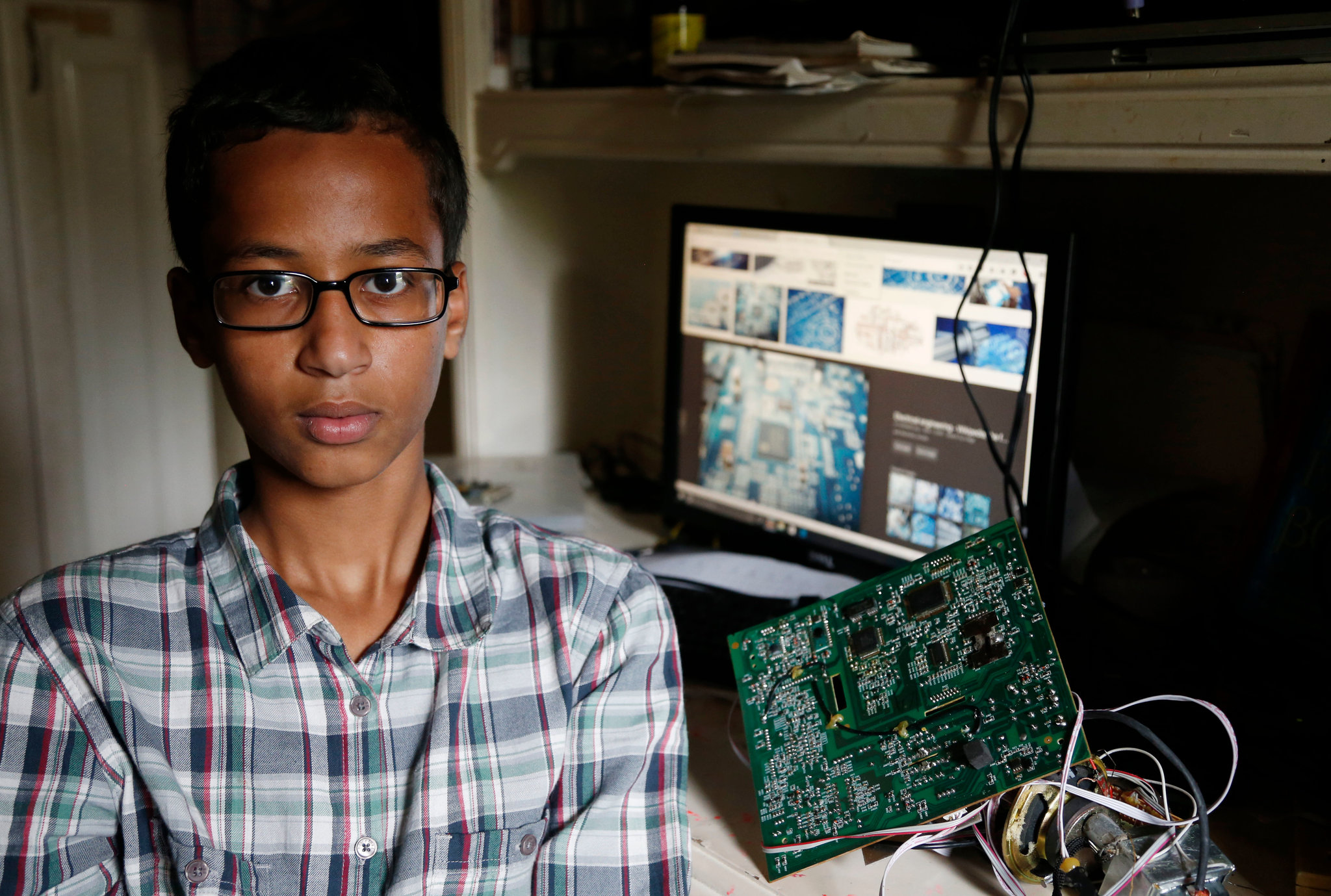
Election season is the time that the crazies come out. We have seen the serial adulterer and Kentucky county clerk, Kim Davis, thumb her nose at the law of the land by refusing to issue marriage licenses to gay couples. She says she wants to uphold the sanctity of marriage as specified by her religion. There is the ironic case of the mistake of a 14 year-old Muslim geek for a bomb-making terrorist in Irving, Texas. The mayor of Irving is the woman who is trying to protect the U.S. from Sharia law. In older news, Joe Barton (R-Texas), says that man had no effect on climate change because the Great Flood was climate change and man-made hydrocarbons were not involved in that extreme event. The 2012 Republican Party of Texas platform declared that critical thinking should be discouraged in Texas schools—they threaten long-held beliefs. (If it looks like I am picking on Texas, it is just because they are such an easy target.)
As in the case of Joe Barton, many of the crazies defend their positions with Biblical passages. Now, I have to admit that I am a Facebook whore. Facebook helps me procrastinate. So I engage the crazies in conversation as a work-avoidance tactic. I confess that almost all of these interactions have been very enjoyable and educational. One important thing I learned in my interactions was that fundamentalist Christians only accept evidence from two sources, the Bible and Fox News. I have nothing to say about Fox News. There is nothing I could say that Jon Stewart has not already said. But the Bible intrigued me. I spent quite a bit of time googling this Biblical verse or that passage in order to try to have material for real conversations with the heavenly inspired. What emerged from the conversations was a set of premises or rules that must hold for any conversation with a fundamentalist:
So, as an atheist, I might point out that the resurrection story is a great metaphor for humans casting off their animal natures and aspiring to a spiritual state of mind. “Nope,” the fundamentalist would say. “Jesus went to heaven, a real place, where he sits with God, a real being.” How do I talk with people who think this way? Well …
Full disclosure: I am a scientist. I am accustomed to playing according to rules of evidence. These two fundamentalist rules are not the rules of evidence used in science, which requires experiments, reproducibility, etc., but I can live with them. I can engage in conversations constrained by these two rules, as long as I can still have access to the calculus of logic discovered by Aristotle a long time ago.
Let’s get to an example. How about everlasting life? This is certainly a topic of Biblical scope. More disclosure: I grew up in the Deep South—Southerners always capitalize “Deep South”—where Christianity is its most oppressive. Therefore, I am very familiar with the Biblical passages about life after death. Here are a couple just to remind you:
Jesus said to her, “I am the resurrection and the life. Whoever believes in me, though he die, yet shall he live,
And he said to him, “Truly, I say to you, today you will be with me in Paradise.”
There are many more.
But … In my Facebook procrastinations this week, someone (I am sorry I do not remember who) sent me the following verses from Ecclesiastes:
Ecclesiastes 9:10 (NASB)
Whatever your hand finds to do, do it with all your might; for there is no activity or planning or knowledge or wisdom in Sheol where you are going.
Ecclesiastes 9:5-6 (NASB)
5 For the living know they will die; but the dead do not know anything, nor have they any longer a reward, for their memory is forgotten. 6 Indeed their love, their hate and their zeal have already perished, and they will no longer have a share in all that is done under the sun.
“Sheol” is translated as “the grave” or “nothingness.”
These passages set me back. Very clearly they say that when you are dead, you are dead. “Memory is forgotten.” These passages must be true by the second rule. This cannot be a metaphor also by the second rule. This appears to violate the self-consistency of the Bible. How can the New Testament talk about life after death, and the Old Testament declares there is only death after death? When I have asked similar question to fundamentalists, people have come back with the claim that it is only the New Testament that is valid, not the Old Testament. This will not fly. I can come up with several quotes directly from Jesus testifying to the validity of the Old Testament. Here are a few examples:
‘The Scripture cannot be broken’ (John 10:35).
Jesus referred to Scripture as ‘the commandment of God’ (Matthew 15:3) and as the ‘Word of God’ (Mark 7:13).
Jesus also indicated that it was indestructible: ‘Until Heaven and earth pass away, not the smallest letter or stroke shall pass away from the law, until all is accomplished’ (Matthew 5:18).
So what is going on here? Even if I use the rules of fundamentalist Christians, the argument goes ad absurdum. How do we reconcile these two different Biblical pictures of life after death? Help me out, please. I actually am quite open to a reasonable argument that follows the two fundamentalist premises. Remember, no reinterpreting the language to fit your position. This is the Word of God we are talking about here.
If we can gain insight into the question of everlasting life, then it should be simple to deal with the logical inconsistencies of people like Kim Davis, Joe Barton, and the Einsteins in Irving, Texas. This should keep us all entertained until the next Presidential election.
X-Events in Natural and Human Systems is a book in preparation being written by John Casti, Roger Jones, and Michael Pennock. It is being published by John Wiley and Sons and is part of the ongoing book series of the Center for Complex Systems and Enterprises at the Stevens Institute of Technology in Hoboken, NJ. The book explores the common elements of extreme events (X-events) in natural and human systems.
Welcome to the site of Roger D. Jones—science, engineering, and art of complexity. Click the menu in the upper left to navigate.
 rogerdjonesphd